
Window tinting is one of the best upgrades you can do for your car. It blocks UV rays, cuts down heat, and gives your vehicle a clean, finished look. But here is where a lot of people quietly undo all of that: cleaning. Most of us just grab whatever glass cleaner is under the sink and get to work. The problem is, what works on your bathroom mirror can slowly wreck your tint film. Peeling edges, cloudy patches, bubbling; almost all of it comes down to the wrong product or the wrong technique. The good news is that cleaning tinted windows properly is simple once you know what to do.
What Makes Tinted Windows Different to Clean?
Factory Tint vs Aftermarket Window Film
Factory tint, sometimes called privacy glass, is pigment built directly into the glass during manufacturing. It is as durable as regular auto glass and can be cleaned the same way.
Aftermarket window film is a thin plastic sheet applied to the inside of your glass by a professional tinter. It gives you proper UV protection and heat rejection, but it is sensitive to harsh chemicals and abrasive materials. Everything in this guide focuses on caring for aftermarket film, as that is where most cleaning mistakes happen.
How Long Should You Wait Before Cleaning Newly Tinted Windows?
Fresh tint needs time to bond properly to the glass. Clean it too early and you risk bubbling, cloudy spots, or film that starts lifting at the edges.
Wait at least 2 to 4 weeks before cleaning the inside of your windows. In cooler weather, that curing time can stretch to 6 or 8 weeks. If something spills during that period, dab it gently with a clean damp cloth and leave it at that. Your installer will give you a specific timeframe based on the film they used, so if in doubt, just ask them.
What You Will Need Before You Start
Recommended Tools and Products
You do not need much. Keep it simple:
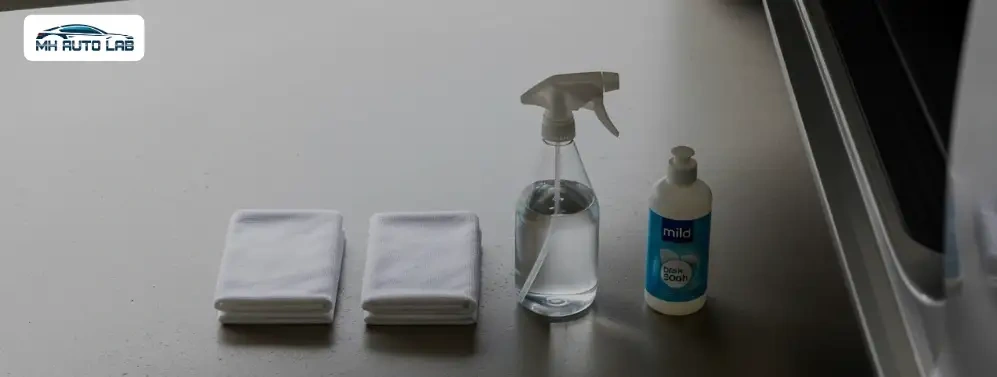
• Two to three clean microfibre cloths, freshly washed with no debris
• A spray bottle with clean, warm water
• A few drops of mild dish soap for stubborn grease or grime
• A tint-safe automotive glass cleaner for heavier soiling
• A rubber squeegee with no exposed metal edges (optional)
What to Avoid and Why
These are the products that cause real damage:
- Ammonia-based cleaners including most standard Windex products, as ammonia eats away at the adhesive over time
- Citrus or acid-based sprays, which break down the film surface
- Alcohol wipes or hand sanitiser, as these are too strong for plastic film
- Paper towels and rough sponges, which micro-scratch the surface and leave the film looking dull
- Baking soda, which is too abrasive
- Undiluted household glass or floor cleaners
Step-by-Step: How to Clean Tinted Car Windows
Step 1 – Get Your Cloths and Cleaning Solution Ready
Make sure your microfibre clothes are clean before you start. A cloth used on your dashboard can have trapped grit that scratches the film. Fill your spray bottle with warm water and add a tiny amount of dish soap if you are dealing with greasy marks. Always spray onto the cloth, never directly onto the glass, as liquid can creep under the film edges over time.
Step 2 – Wipe Down the Interior Glass
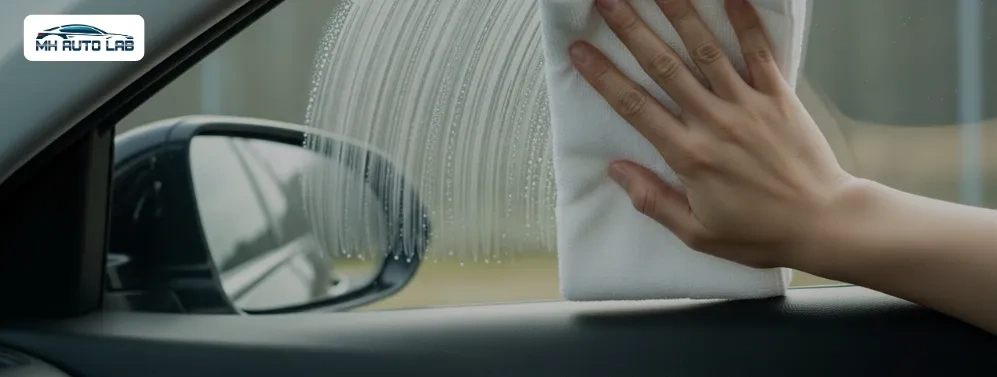
Dampen your first cloth and wipe the interior glass using straight, overlapping strokes from the top down. Skip the circular motions as they push dirt across the surface rather than lift it, which leads to streaks. Keep your pressure light, especially near the film edges.
Step 3 – Clean the Weatherstripping and Window Edges
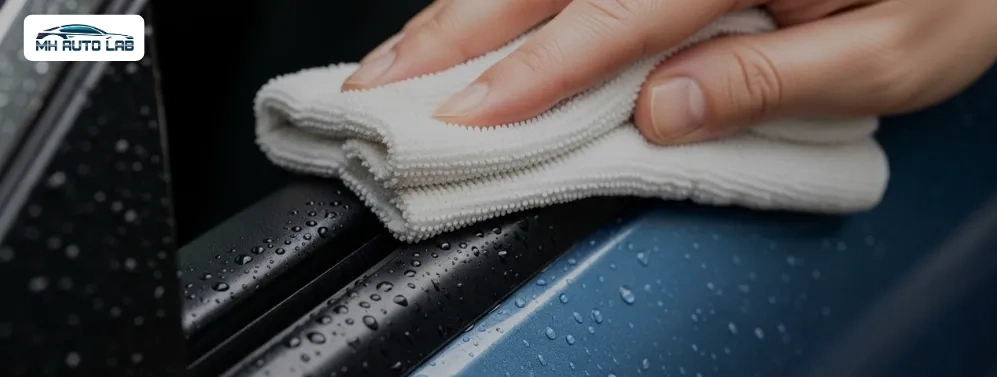
The rubber seal around your window channel collects dust and grit. Every time your window goes up or down, that debris drags across the film. Run a slightly damp cloth along the weatherstripping before and after cleaning the glass. If you use a squeegee, make sure it is clean. Petrol station squeegees that sit in dirty water are a quick way to scratch your tint.
Step 4 – Dry and Buff for a Streak-Free Finish
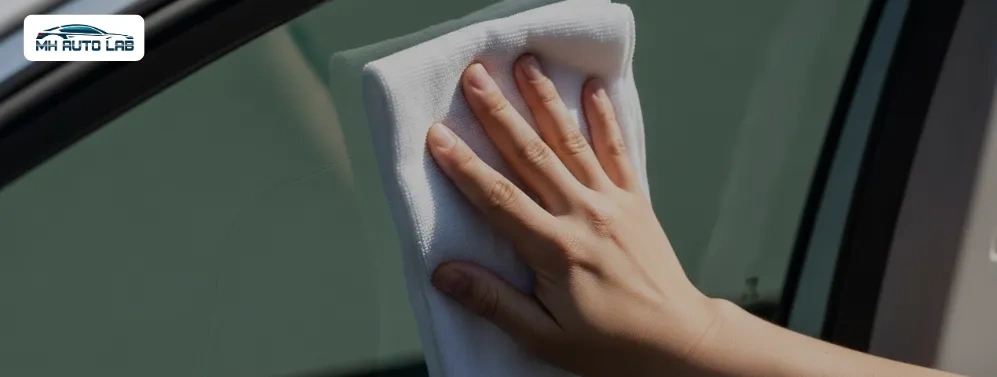
Use a second dry microfibre cloth to remove most of the moisture, then do a final pass with a third completely dry cloth. That last wipe is what gets rid of streaks. Keep your strokes straight and hold the cloth flat against the glass. Takes an extra 30 seconds but the result is noticeably cleaner.
How to Clean the Outside of Tinted Car Windows
The tint film sits on the inside of your glass, not the outside. The exterior surface is just regular glass, so you can wash it the same way you wash the rest of your car. Soap, water, a wash mitt, and a rinse are all you need. No special treatment required.
Just avoid directing high-pressure water at the window seals for extended periods. Normal hose pressure during a wash is completely fine.
How Often Should You Clean Tinted Car Windows?
For most drivers, once every two to four weeks is enough. If you have kids in the car regularly or park in dusty areas around Brisbane, bump it up to weekly. Sunscreen and body oils from passengers transfer onto the glass easily and become stubborn if left for a few weeks, so wipe those off sooner rather than later.
Common Mistakes to Avoid
These come up regularly and most are easy to avoid:
- Cleaning too soon after installation before the film has cured
- Using Windex or any ammonia-based spray, which is the most common cause of tint failure
- Wiping with paper towels, which leave micro-scratches that dull the film over time
- Spraying cleaner directly onto the glass instead of onto the cloth
- Wiping in circles instead of straight top-to-bottom strokes
- Ignoring the weatherstripping, as trapped grit will scratch the film every time you roll the window
- Running a freshly tinted car through an automatic brush wash, as the bristles and chemicals are not tint-friendly
Frequently Asked Questions
Can I use Windex or glass cleaner on tinted windows?
Most standard glass cleaners including many Windex products contain ammonia, which breaks down the adhesive holding the film to the glass. Check the label before using anything and stick to ammonia-free products or plain water with a microfibre cloth.
Does ammonia damage window tint?
Yes, and it does it gradually. Ammonia weakens the bond between the film and the glass a little each time it is applied. Over weeks and months this shows up as bubbling, clouding, and peeling at the edges.
Can I use vinegar to clean tinted windows?
We would skip the vinegar. It works well on plain glass but its acidity can react with the film surface over time. Warm water with a drop of mild dish soap does the same job without the risk.
Can I take my car through a car wash with tinted windows?
Touchless car washes are generally fine once the tint has fully cured. Brush-based automatic washes are best avoided as the bristles can scratch the film and the chemicals are often not tint-safe. Hand washing is always the better option.
Conclusion
Getting the cleaning right starts with a proper installation. At MH Auto Lab, we install professional-grade window tint for cars across Brisbane and make sure every client knows how to look after it before they drive away.
Whether you are tinting your car for the first time, replacing old film, or just want honest advice on your options, get in touch with our team. Visit us at mhautolab.au or call to book a time.